
You’re in a meeting and someone junior just explained something you didn’t fully follow, so you nodded like you did. There’s a tool the newest hire on your team already knows cold, and you’ve been quietly faking your way through it for weeks. A process at your company has been running the same way for years, and if someone asked you why, you honestly wouldn’t have a real answer, so you’re hoping nobody asks.
If any of that sounds familiar, you already know the actual problem isn’t the not-knowing. Everyone doesn’t know things. The problem is what asking feels like when the person who’d have to explain it to you has less seniority, less experience, or less status than you do.
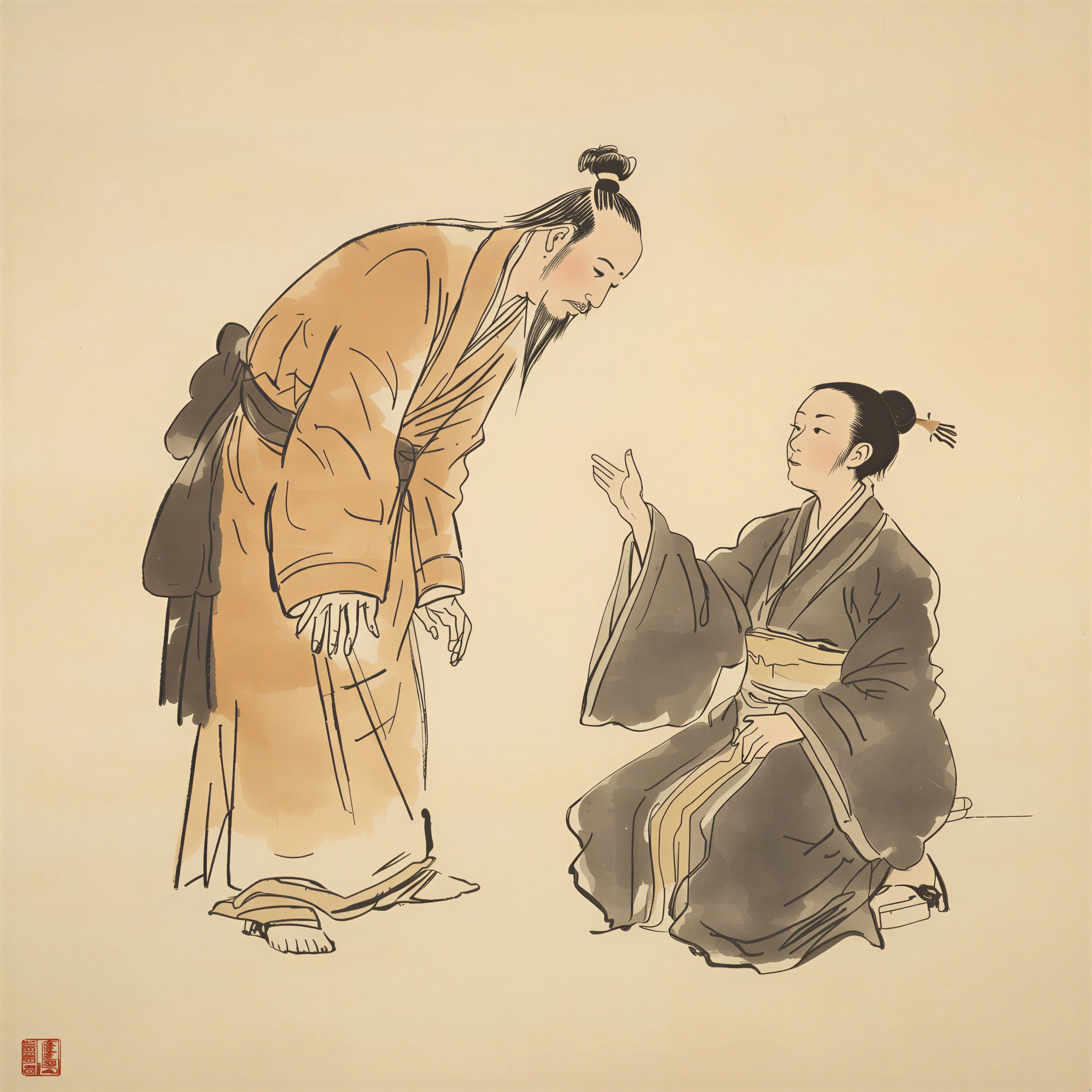
There’s a story from the Analects, the sayings of Confucius, about a nobleman who was given the honorary title “Wen,” meaning cultured, someone whose name deserved to be remembered well. One of Confucius’s own students didn’t think the man deserved it, so he asked why. Confucius said the man earned the title for one specific reason. He was never ashamed to ask questions of people below him in rank. Not brilliance. Not a long list of achievements. Just the willingness to ask someone with less power than him for something he genuinely didn’t know.
Most of us do the opposite, and we do it so automatically we barely notice. We protect the appearance of already knowing instead of actually learning. Somewhere along the way, asking down started to feel like it made us smaller, when the entire point of the story is the opposite: the asking is what made the man worth remembering at all.
What’s inside:
A one-page illustrated telling of the actual story behind 不耻下问 (bù chǐ xià wèn), the two thousand year old line about a man remembered for exactly this. Short, readable, built to sit on your desk or get pinned somewhere you’ll actually see it again.
A one-page worksheet that walks you through the real moment this shows up: naming what you’re actually stuck on, figuring out who around you already knows it (usually not the most senior person in the room), drafting the plain, unpadded version of the question you’ve been avoiding, and closing the loop once you’ve asked it.
A twelve-card deck, each one built around a specific, real version of this exact fear: the manager who won’t ask the intern, the founder who won’t ask the support team, the executive who’s never once asked their own assistant how something actually gets done, the teacher who won’t ask the student who clearly understands the material better. Each card pairs the situation with a simple three-step way through it, plus a fully worked example so you’re not starting from a blank page.
Who this is for:
Leaders, managers, founders, consultants, teachers, and anyone whose job quietly depends on other people believing they already have the answers. If your title, your years of experience, or your own self-image make it harder to ask a simple question of someone with less of those things than you, this was built for exactly that moment.
Who this isn’t for:
If you already ask questions freely regardless of who’s in the room, you probably don’t need this. This is for the specific, very common gap between how much you actually know and how much you’re currently pretending to.
You don’t need to become someone who knows everything. You need one honest question, asked to the right person, instead of another few months of nodding along.
Get the Ask-Down Toolkit and ask the question you’ve been avoiding.